
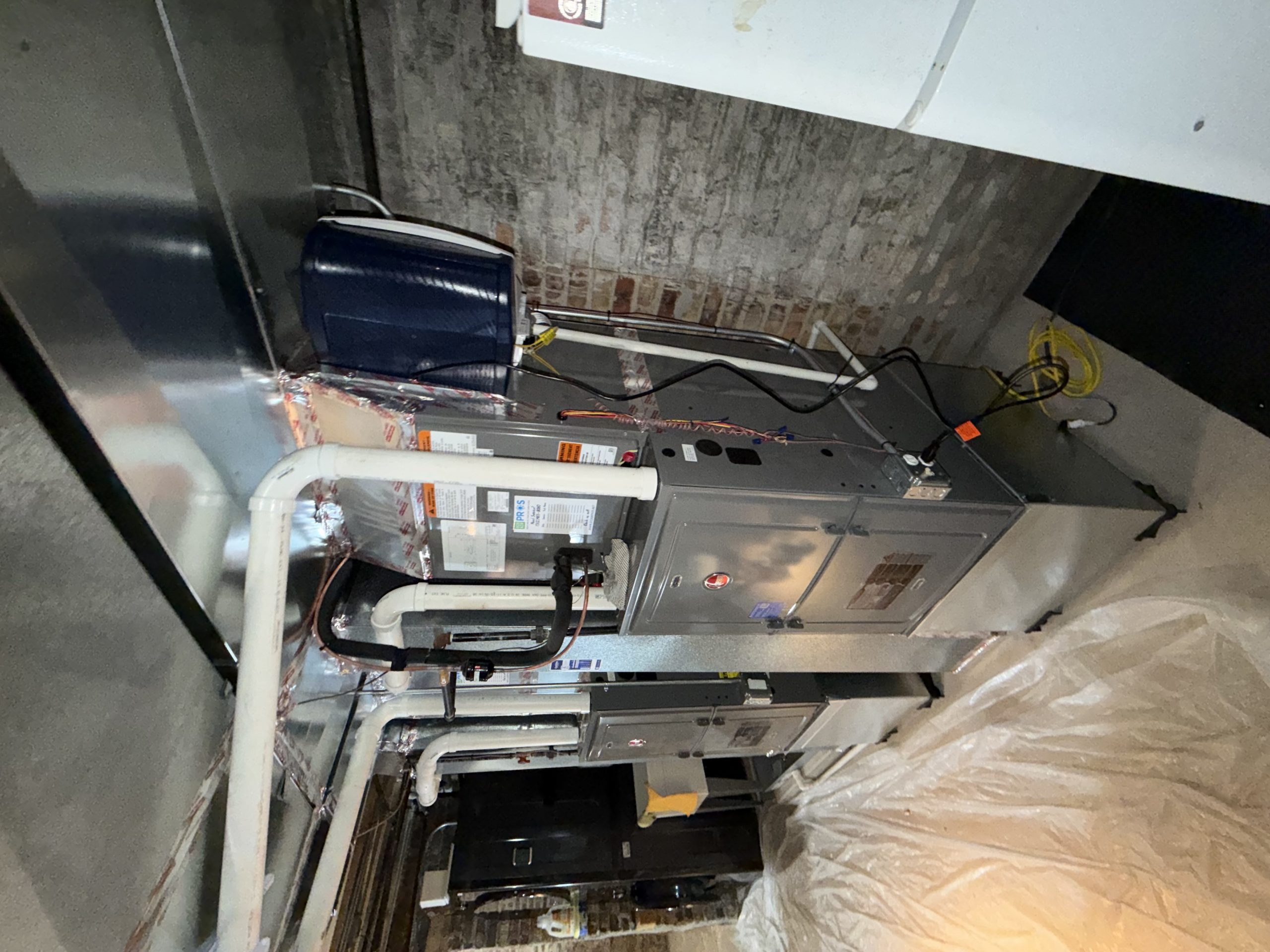

A Chicago homeowner wanted an equipment upgrade that addressed several concerns together: monthly energy costs, the environmental impact of heating and cooling, operating noise, and comfort throughout the house. Eco Air Pros completed the project with two high-efficiency Rheem heat pump systems, whole-home humidifiers, and airflow balancing. Rather than treating equipment replacement and dry-season comfort as separate jobs, our crew brought those elements into one coordinated upgrade.
Completed on November 11, 2026, the project replaced the home’s legacy equipment with a more efficient system arrangement. The homeowner also wanted to take advantage of available efficiency rebates. The completed work focused on the equipment and air distribution needed to support those goals.
What the Chicago Homeowner Wanted From the Heating Upgrade
The homeowner’s request went beyond replacing older equipment. Lower monthly bills and a smaller carbon footprint were important objectives, but so were quiet operation and consistent comfort across the house. Those priorities made both the equipment selection and the way it worked with the home’s airflow important parts of the project.
Chicago sits in northeastern Illinois along the southwestern shore of Lake Michigan. For this home, the customer specifically identified dry-season comfort as an issue to address alongside heating and cooling performance. Adding whole-home humidifiers allowed our crew to include moisture management in the same project as the heat pump upgrade.
The homeowner’s interest in efficiency rebates was another consideration. Incentive programs can have equipment-specific and application-specific requirements, so an interest in rebates is different from a confirmed award. This project record documents the installation, but does not establish a rebate amount or an approved incentive payment.
Integrating Two High-Efficiency Rheem Heat Pump Systems
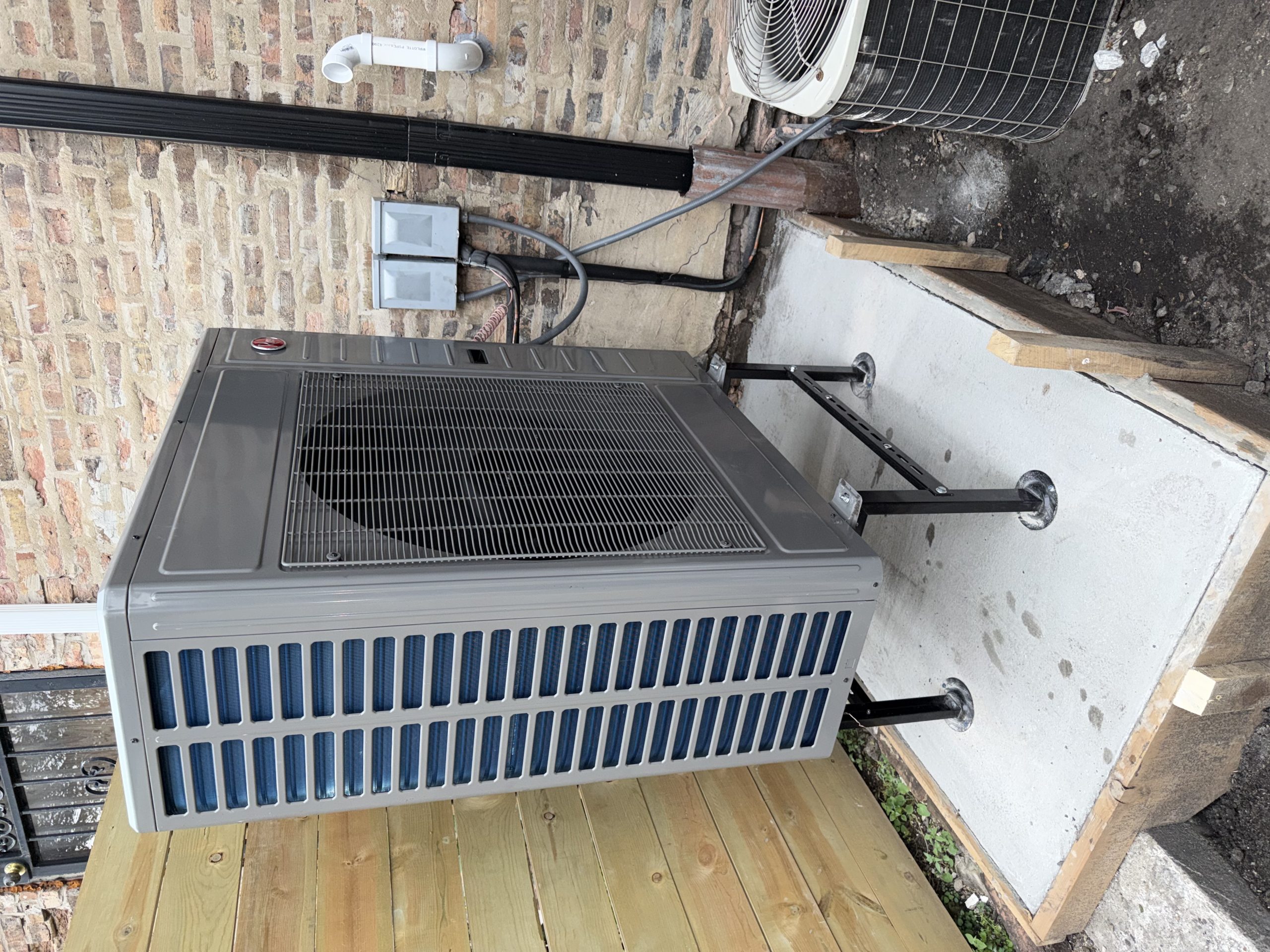
Our crew installed and integrated two high-efficiency Rheem heat pump systems. The dual-system arrangement was a defining feature of this job, giving the project a different scope from a single-equipment replacement. Both systems were part of the homeowner’s plan to improve comfort throughout the house.
A heat pump transfers heat rather than relying solely on producing heat at the point of use. That operating principle makes heat pumps relevant to customers considering changes in energy use and equipment efficiency. Actual consumption still depends on factors such as outdoor conditions, thermostat settings, the building itself, and how the equipment operates over time.
The project notes identify the Rheem brand and the high-efficiency equipment selection, but do not specify model numbers or efficiency ratings. The completed installation is therefore best described by its documented scope: two Rheem heat pump systems integrated with the home’s comfort equipment. Specific capacity, performance ratings, and system configuration should not be inferred from the number of units alone.
Airflow Balancing as Part of the Installation
Installing new equipment was only one part of the work. Our crew also optimized airflow balancing, addressing how conditioned air moved through the home. This step connected the equipment upgrade with the homeowner’s goal of comfort across the entire house.
Air distribution matters because the equipment and the rooms it serves function as one system. A heat pump’s output must reach the occupied spaces for the customer to experience its benefit. Balancing focuses attention on that delivery rather than assuming that new equipment alone addresses every comfort concern.
For this project, airflow optimization was documented as completed work. No room-by-room readings or before-and-after measurements were provided, so we are not assigning numerical improvements to individual spaces. Homeowners exploring a similar upgrade can learn more about our heating installation services and discuss how equipment replacement and air distribution fit together.
Whole-Home Humidifiers for Dry-Season Comfort
Our crew installed high-capacity whole-home humidifiers alongside the heat pumps. These additions addressed a separate part of indoor comfort: moisture in the air. Temperature control and humidity control serve different purposes, which is why the humidifiers were a meaningful part of the scope rather than an incidental accessory.
A whole-home humidifier adds moisture through a centralized system instead of relying on individual portable units in separate rooms. For this homeowner, the objective was to support comfort during dry conditions while coordinating the humidifiers with the upgraded heating equipment. The project combined those functions in one installation.
Humidity settings should reflect the home and the conditions at the time, rather than a single setting assumed to suit every situation. Adding humidification also does not establish that every aspect of indoor air quality has been addressed. Customers considering temperature control and humidity together can review our broader HVAC services as a starting point.
The Completed System and What to Watch Over Time
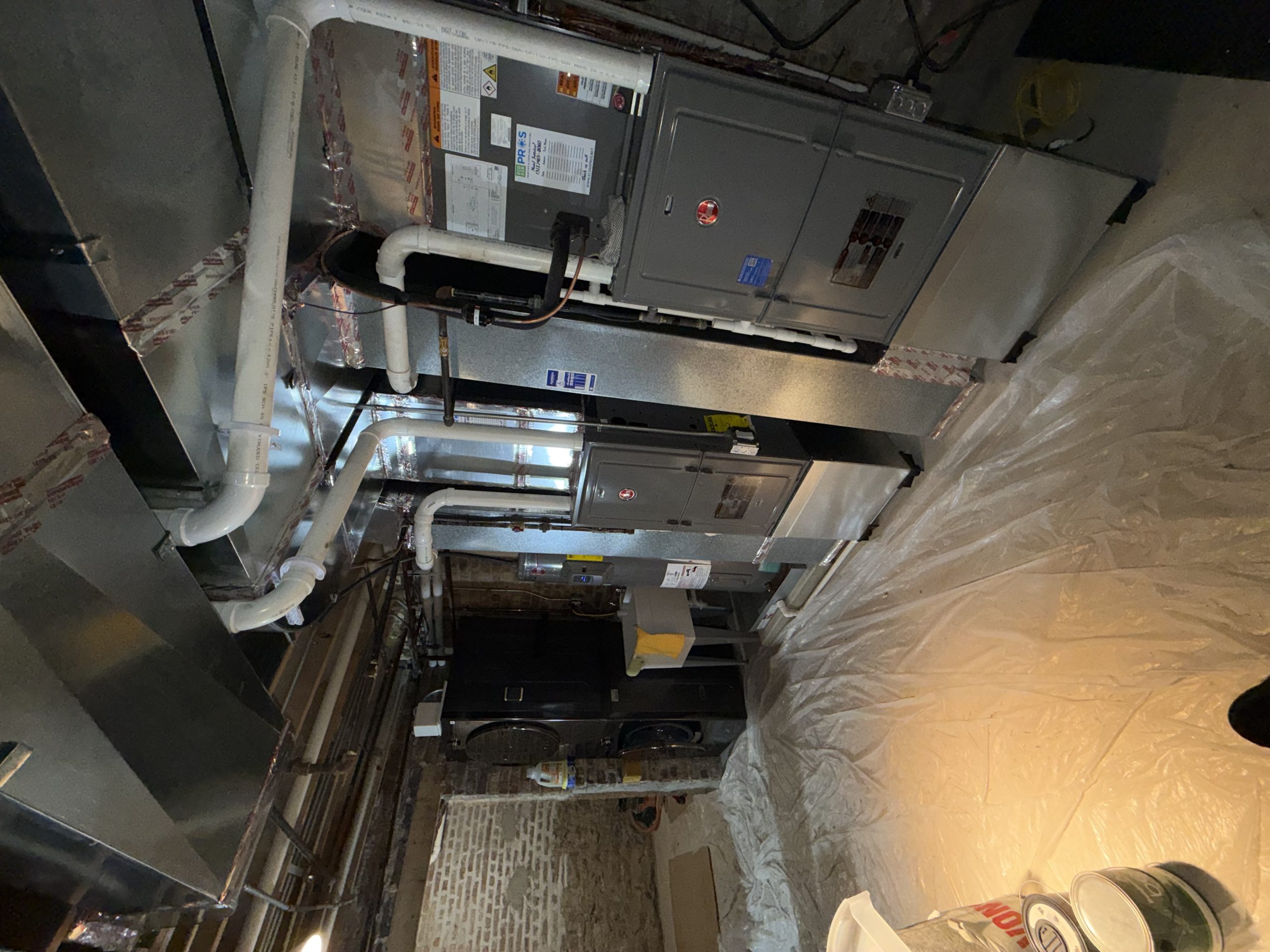
The finished project brought together two Rheem heat pumps, high-capacity whole-home humidifiers, and optimized airflow balancing. The installation replaced the legacy equipment with a more efficient arrangement while addressing the homeowner’s dry-season comfort objective. It was a combined equipment and comfort upgrade, rather than a replacement focused on one component.
Lower bills, reduced environmental impact, and quieter climate control were customer goals. The installation record does not include utility-bill comparisons, sound measurements, or emissions calculations, so those outcomes cannot be quantified here. Tracking actual use after an upgrade is more informative than attaching an unsupported savings percentage to new equipment.
After a project like this, useful observations include whether rooms feel consistent, whether humidity settings remain comfortable, and whether operation changes unexpectedly. Filters and humidifier components also need attention according to the applicable equipment instructions. These are general upkeep considerations, not a record of additional maintenance performed during this installation.
Planning a Related Heating Project in Chicago
This job illustrates how several comfort objectives can shape one project. Equipment efficiency, air distribution, and humidity management each address a different concern. Our mechanical contracting services provide another point of reference for customers considering work involving connected building systems.
For other local examples, visit our heating contractor project in Edison Park or read about HVAC upgrades and permit rules in South Austin. Those are separate project references, not descriptions of work performed at this home.
If you are comparing options for a property in Chicago, start with the specific concerns you want the project to address. For this homeowner, that meant two heat pumps, balanced airflow, and whole-home humidification. You can also find our business information through Eco Air Pros on Google.